 Scroll
About Fuerteventura
Space, light and very long beaches.
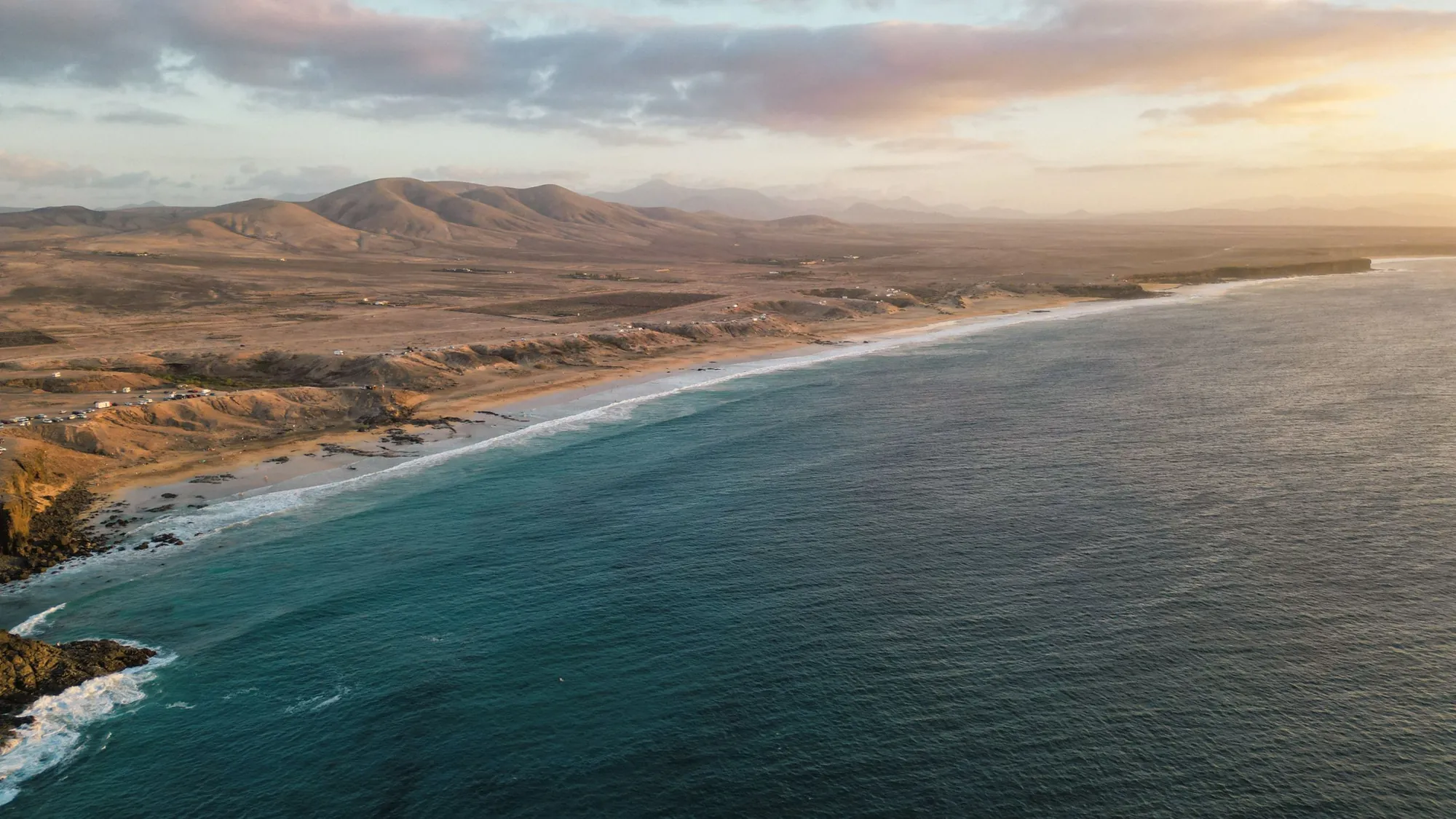
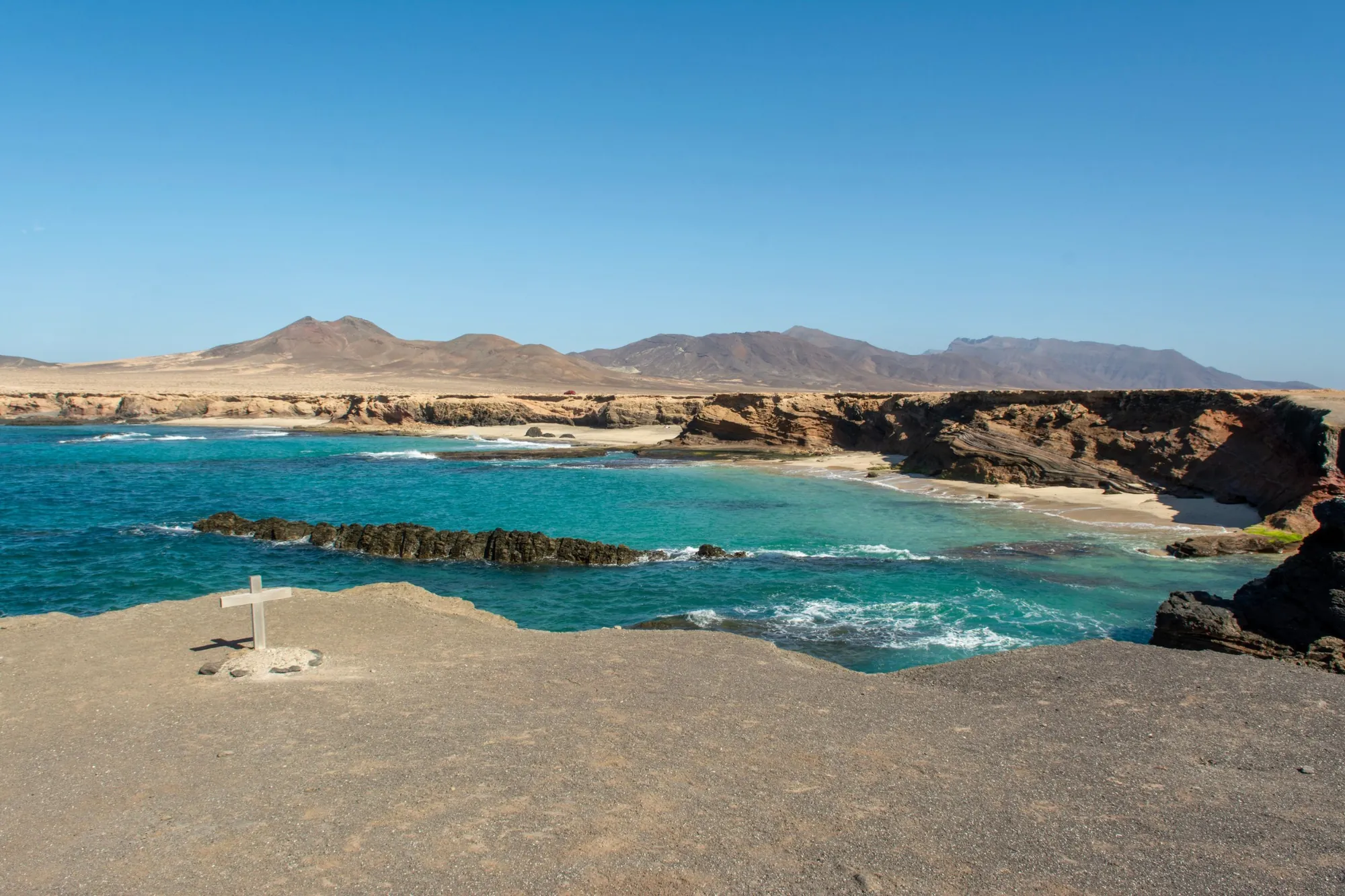
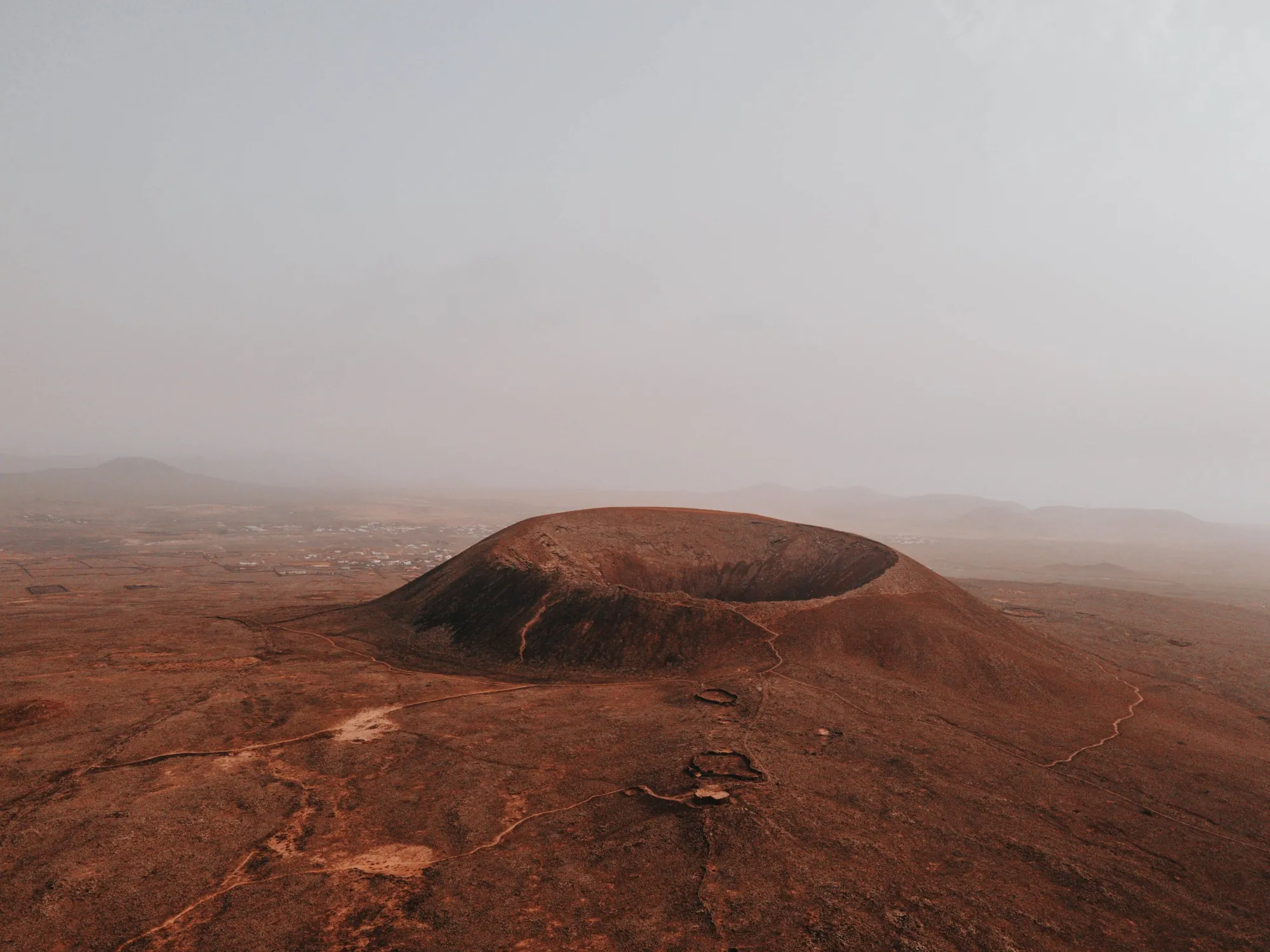
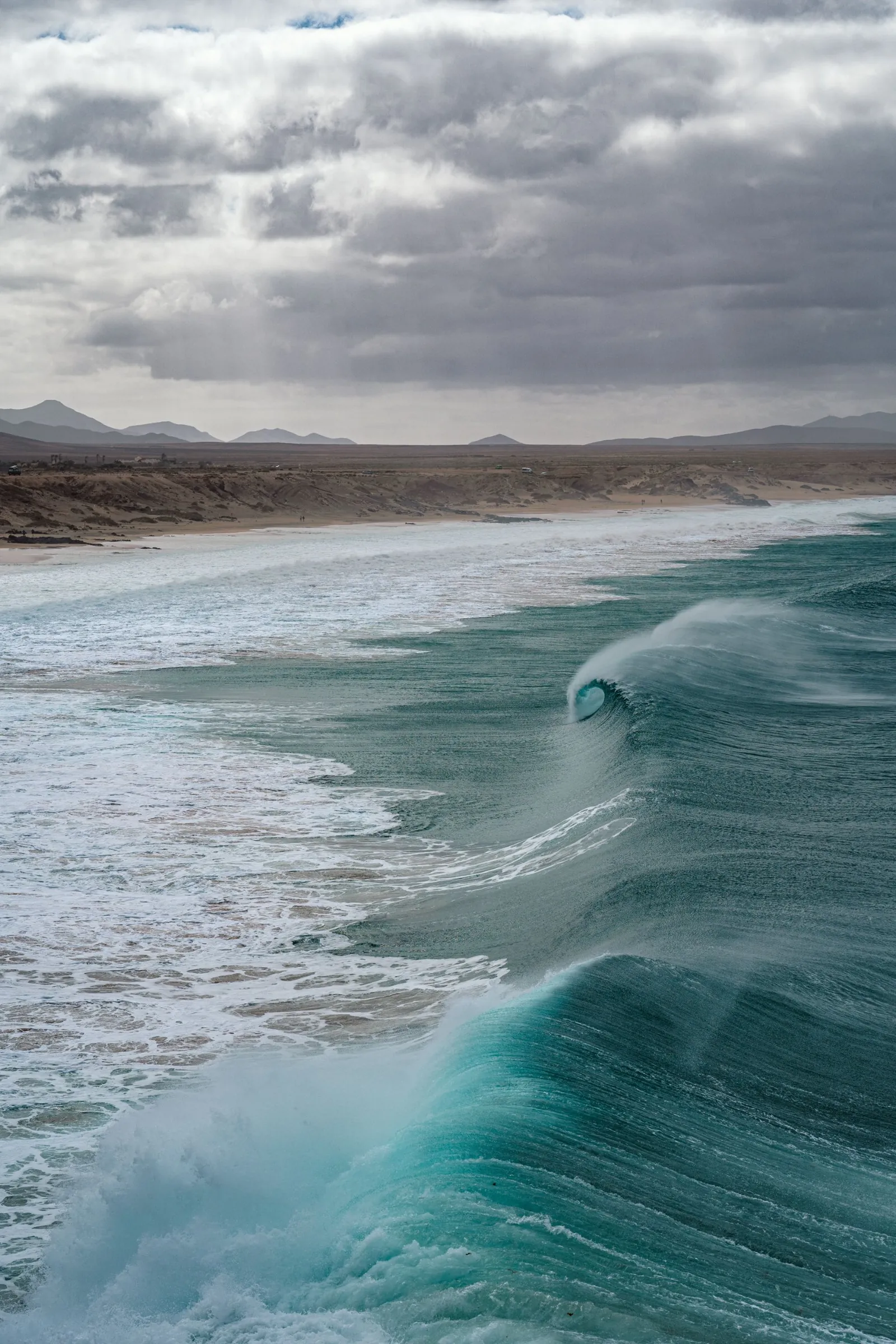
Fuerteventura is the oldest of the Canary Islands and the closest to Africa, about 100 kilometres away. Millions of years of wind and sea have worn its volcanoes down into soft brown hills, and given it the longest beaches in the archipelago: the white dunes of Corralejo in the north, the wild sweep of Cofete in the south, and the lagoons of Sotavento. The steady wind makes it one of Europe's best places for surfing, windsurfing and kitesurfing.
Don't miss
The best of Fuerteventura.
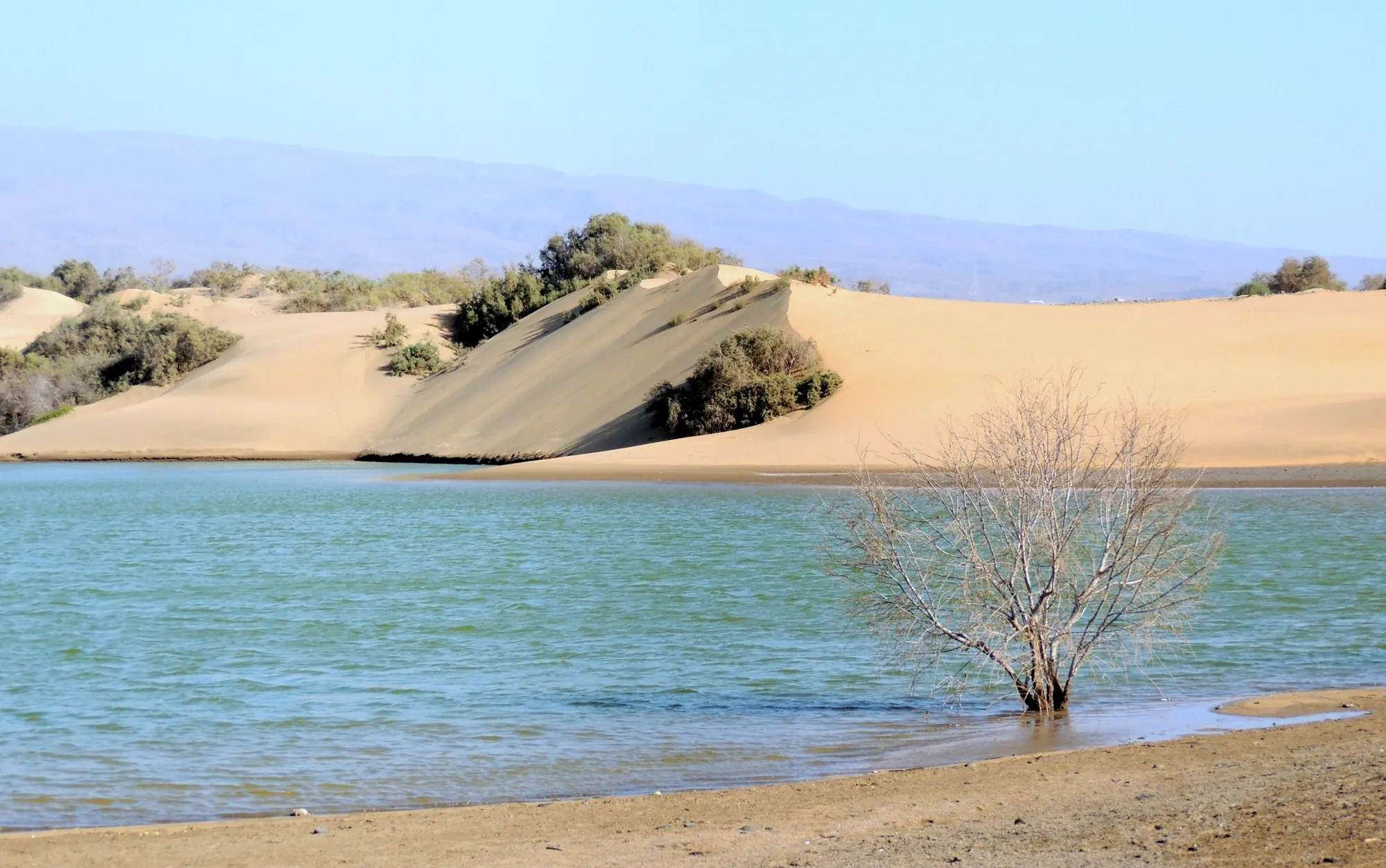
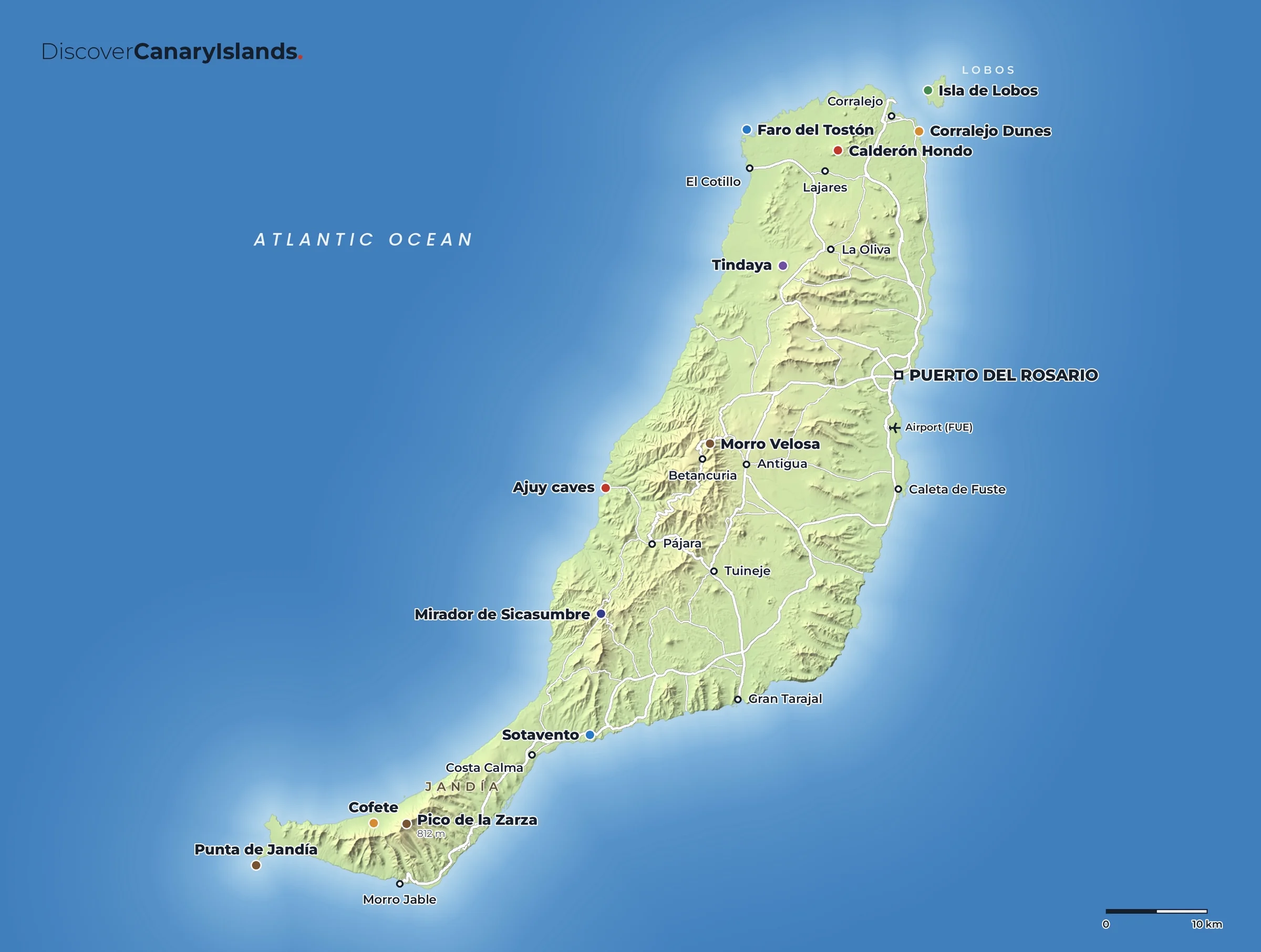
- Corralejo DunesA natural park of white sand dunes running down to the sea, just south of Corralejo.
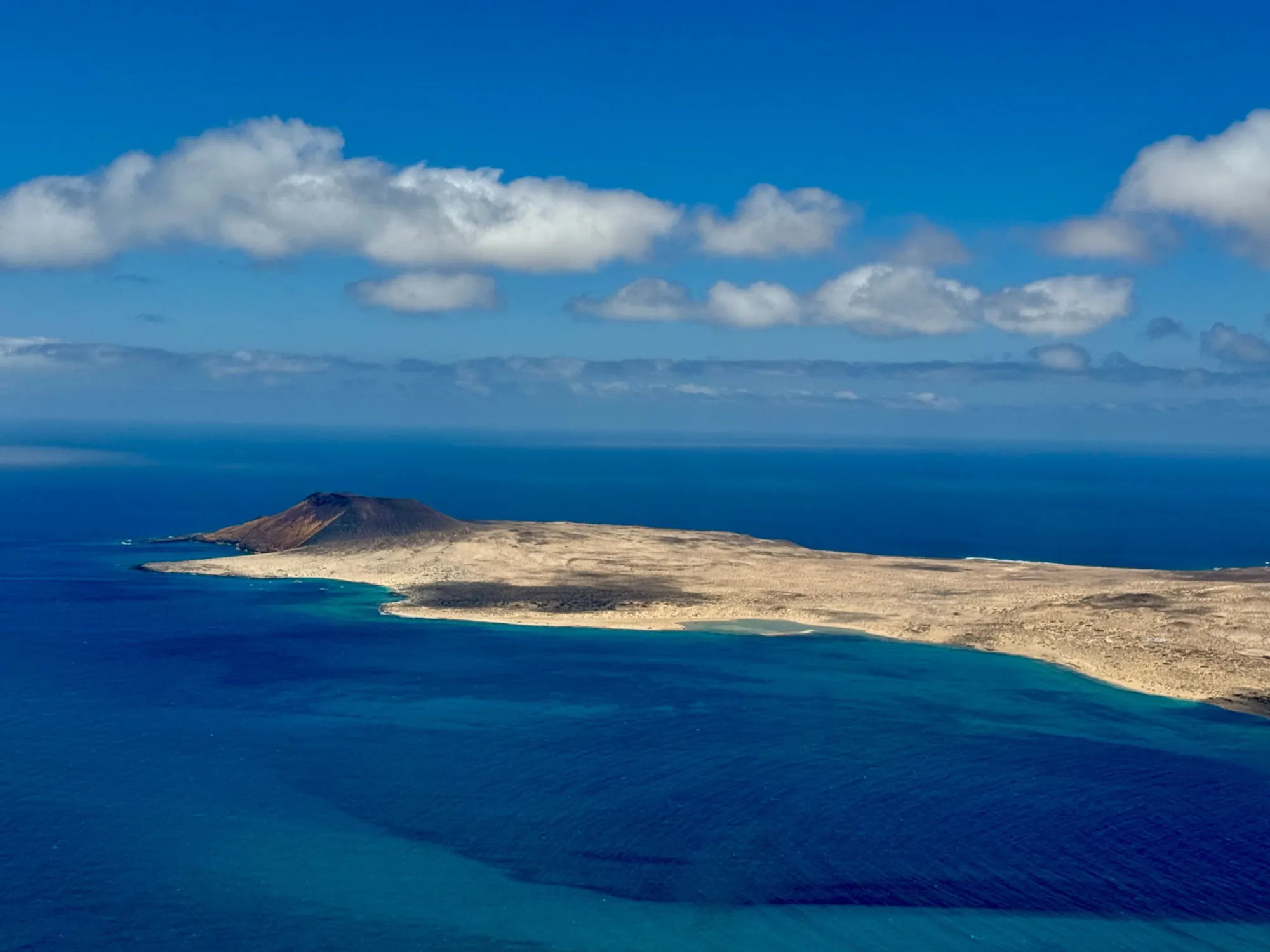
- Isla de LobosA small protected island a short boat ride from Corralejo, with a walk around its volcano and a lagoon for swimming.
- CofeteA wild, empty beach below the mountains of Jandía, reached by a gravel road.
- SotaventoWide lagoons and sandbanks on the south-east coast, famous for kitesurfing and windsurfing.
- BetancuriaThe island's old capital, a quiet village in a green valley in the mountains.
- El Cotillo & Calderón HondoSurf beaches and calm lagoons in the north-west, and a short climb to the rim of a crater.
Maps
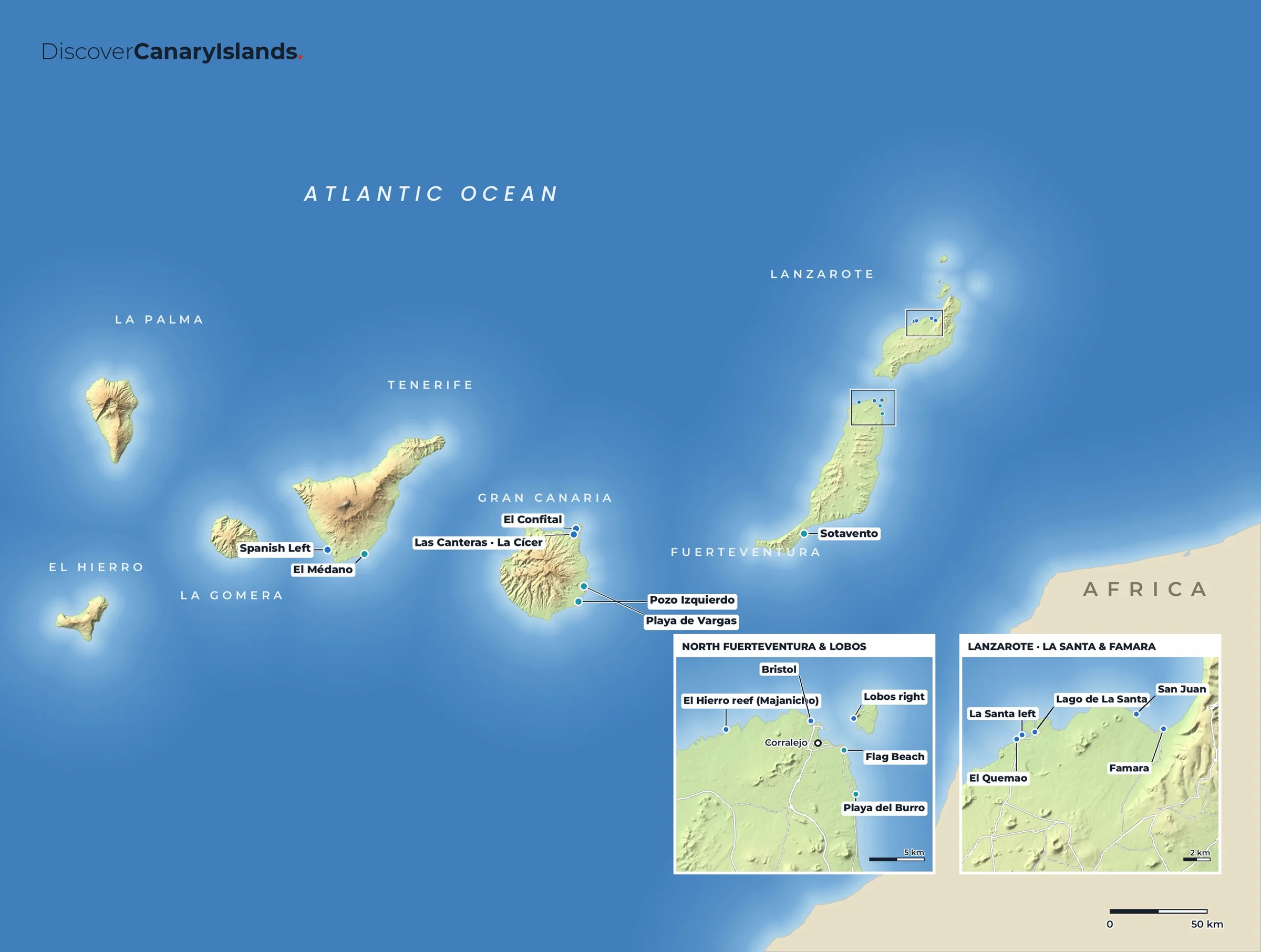
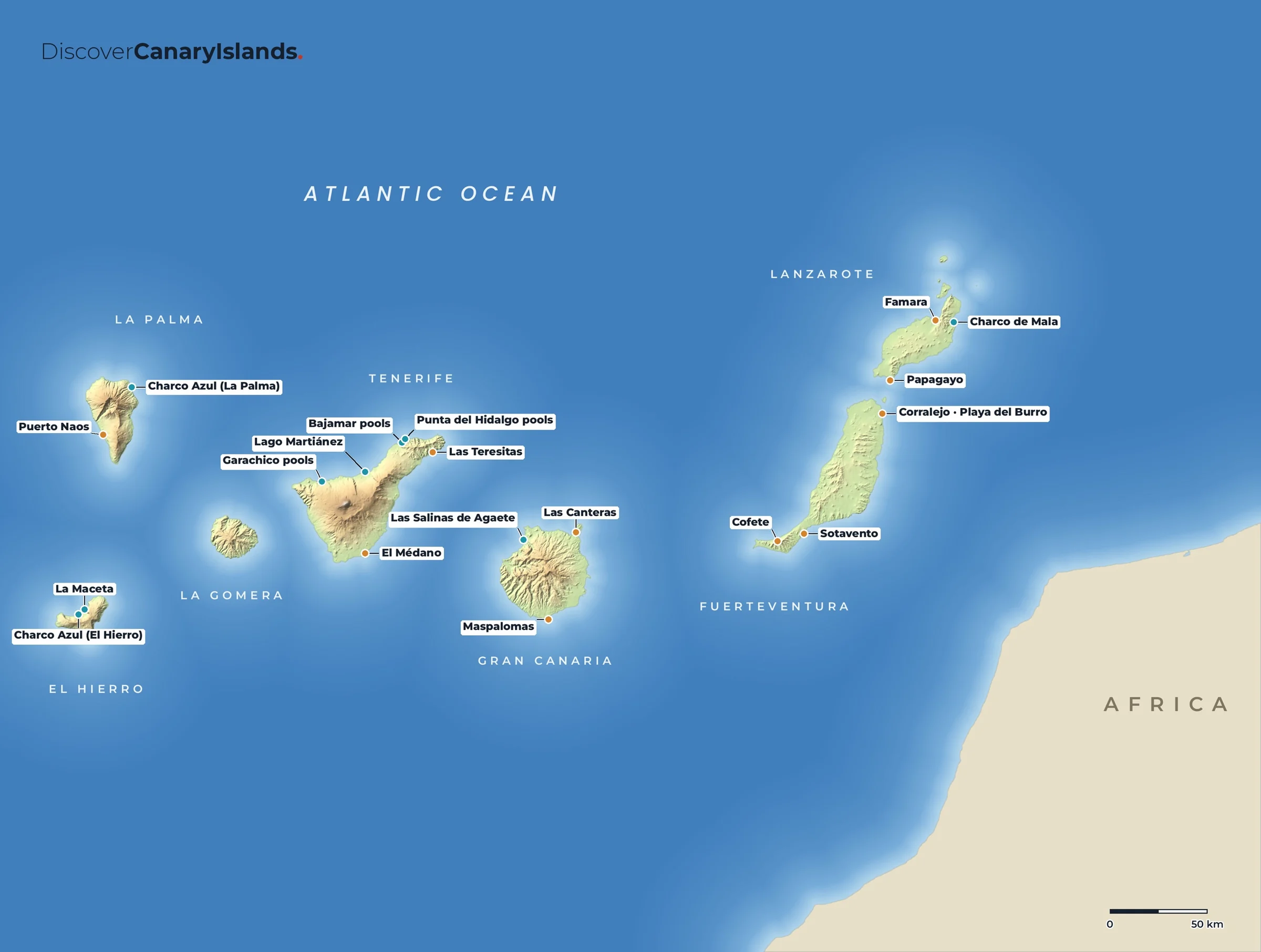
Fuerteventura on the map.
Practical
Everything you need to know.
Getting there
Fuerteventura Airport (FUE) is just south of Puerto del Rosario. Ferries from Corralejo cross to Playa Blanca on Lanzarote, and from Morro Jable to Gran Canaria and Tenerife.
Getting around
Distances are long and buses are infrequent outside the main towns, so most visitors hire a car. The road to Cofete is gravel.
When to go
All year. Summer brings the strongest wind; winter brings the best surf. It is one of the driest and sunniest islands.
Where to stay
Corralejo for the dunes and Lobos, El Cotillo for surfing and a slower pace, Costa Calma or Morro Jable for the long southern beaches.
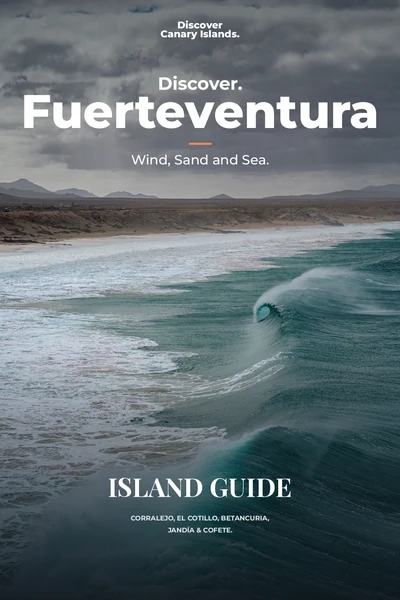
The island guide · Coming soon
Discover Fuerteventura
Corralejo, El Cotillo, Betancuria, Jandía & Cofete. Leave your email and we will tell you the day it launches.